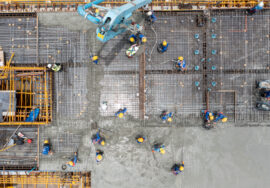
Construction Project Delays: Proven Prevention Strategies
Construction Project Delays: A Major Threat to Project Performance
Construction project delays are among the most critical challenges in the construction industry today. Delays affect timelines, increase costs, strain stakeholder relationships, and often result in disputes and claims. Construction project delays not only impact contractors but also disrupt owners, investors, and end users, making delay management a key success factor in modern construction projects.
With increasing project complexity, regulatory requirements, and market volatility, proactive control of delays has become essential.
What Are Construction Project Delays?
Construction project occur when project activities are completed later than planned, resulting in schedule overruns. Delays may be caused by internal project inefficiencies or external factors beyond the control of project teams.
Construction project can be categorized as excusable, non-excusable, compensable, or concurrent depending on contractual responsibilities and causes.
Key Causes of Construction Project Delays
Poor Project Planning and Scheduling
Unrealistic timelines, inadequate work sequencing, and lack of detailed scheduling lead to frequent delays.
Design Errors and Late Changes
Incomplete drawings and frequent design revisions disrupt workflow and cause rework.
Delayed Approvals and Permissions
Regulatory clearances, inspections, and authority approvals often take longer than anticipated.
Financial Constraints and Cash Flow Issues
Delayed payments and funding gaps slow down procurement and site progress.
Resource Shortages
Shortage of skilled labor, materials, or equipment impacts productivity.
Contractor and Subcontractor Issues
Poor coordination, low productivity, and weak site supervision contribute significantly to construction project .
Impact of Construction Project Delays
Construction project have wide-ranging consequences, including:
-
Escalation of project costs
-
Increased overheads and preliminaries
-
Liquidated damages and penalties
-
Contractor claims and disputes
-
Loss of revenue due to delayed operations
-
Reduced quality and safety performance
-
Damage to reputation and client trust
If not addressed early, prolonged delays may result in project suspension or termination.

Types of Construction Project Delays
Excusable Delays
Delays caused by uncontrollable events such as extreme weather or regulatory changes.
Compensable Delays
Delays for which contractors may claim additional time and cost due to owner-related issues.
Non-Excusable Delays
Delays resulting from contractor inefficiencies or poor management.
Concurrent Delays
Multiple overlapping delays caused by different parties, often leading to complex claim assessments.
How to Manage Construction Project Delays Effectively
Develop Realistic Schedules
Use logic-based planning tools and realistic productivity assumptions.
Monitor Progress Regularly
Track actual progress against baseline schedules to identify slippages early.
Integrate Time and Cost Controls
Delays directly impact costs; integrated controls improve decision-making.
Control Scope and Design Changes
Assess schedule impact before approving any variations.
Improve Communication and Coordination
Timely decisions and clear communication reduce idle time on site.
Role of Consultants in Managing Construction Project Delays
Experienced consultants help identify delay risks and implement corrective strategies.
At AMs – Construction Project Management Consultancy, we support clients in managing construction project through:
-
Schedule review and validation
-
Delay risk assessment and forecasting
-
Progress monitoring and reporting
-
Extension of Time (EOT) analysis
-
Delay claims and dispute support
-
Integrated project control frameworks
Contact Our Delay Management Experts
Construction Project Delays in the Indian Context
In India, construction project are commonly driven by land acquisition issues, statutory approvals, funding constraints, and coordination challenges. Organizations such as the National Highways Authority of India continuously emphasize improved planning, governance, and contract management to reduce delays in large infrastructure and construction projects.
Best Practices to Reduce Construction Project Delays
Early Risk Identification
Identify potential delay risks during planning and pre-construction stages.
Strong Contract Management
Clearly define responsibilities, timelines, and delay provisions.
Digital Project Controls
Use real-time dashboards for schedule tracking and reporting.
Regular Project Reviews
Independent reviews help detect issues before they escalate.
Continuous Improvement
Apply lessons learned from past projects to future planning.
Conclusion
Construction project pose a significant risk to cost, quality, and stakeholder confidence. By adopting strong planning practices, proactive monitoring, effective change control, and engaging experienced consultants, organizations can significantly reduce delay risks. In today’s competitive construction environment, managing delays is not optional—it is essential for successful project delivery.
Read more related articles to enhance your knowledge and make informed decisions
Cost-Effective Modular Construction: Fast, and Sustainable Building Solutions
Smart Modular Buildings: Innovative, Efficient, and Sustainable Construction